What is a 15-minute city? Learn how walkability transforms neighborhoods, explore global examples, and test your own area with walking and cycling radius maps.
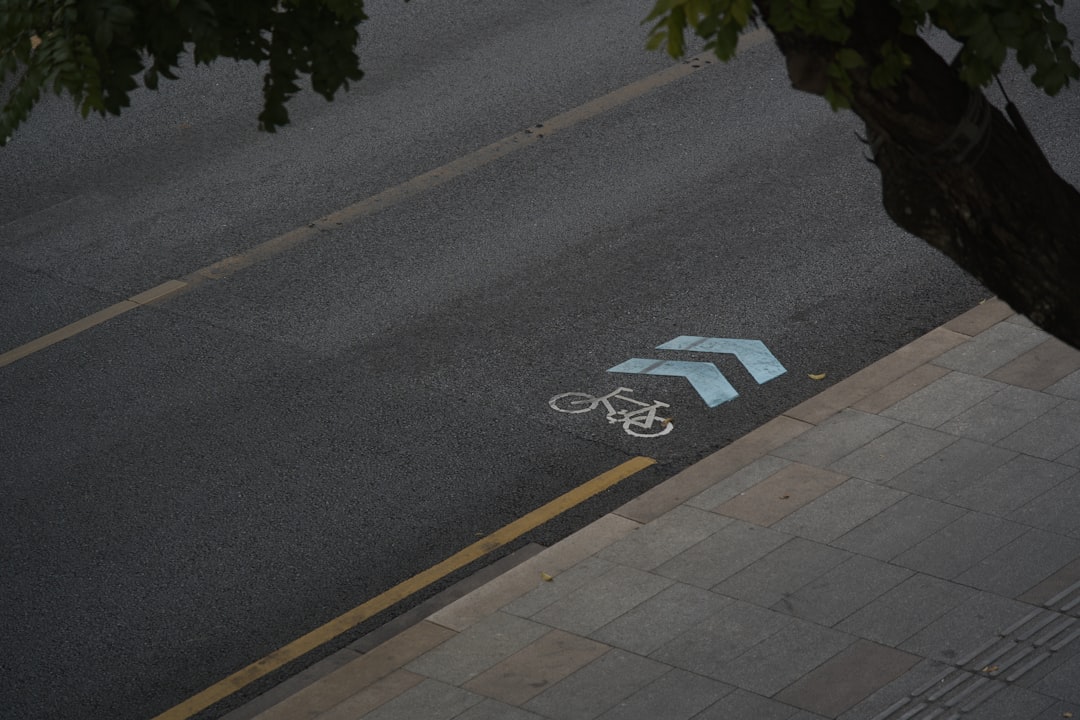
The idea is deceptively simple: what if everything you need -- groceries, healthcare, schools, parks, your workplace, a decent cup of coffee -- were within a 15-minute walk or bike ride from your front door? This is the core promise of the 15-minute city, a concept that has moved from academic theory to official urban policy in cities across the world. It has also become one of the most debated ideas in modern walkability and urban planning.
Whether you are a city planner evaluating neighborhood infrastructure, a homebuyer trying to find a genuinely walkable area, or simply curious about why this idea generates both excitement and controversy, this guide covers the history, the data, the global examples, and -- most practically -- how to check whether your own neighborhood qualifies as a 15-minute city using tools like RadiusMapper.com.
The 15-minute city (French: la ville du quart d'heure) is an urban planning concept proposing that all essential services and amenities should be accessible within a 15-minute walk or bicycle ride from any residential point in a city. The framework rests on six core social functions that every neighborhood should provide:
When a neighborhood delivers all six within a 15-minute non-motorized travel radius, residents can meet most daily needs without a car. The result is reduced traffic, lower carbon emissions, improved public health, stronger local economies, and -- according to a growing body of research -- measurably higher life satisfaction.
The concept was formalized by Carlos Moreno, a Colombian-French scientist and professor at the Sorbonne in Paris. Moreno introduced the framework in a 2016 paper and refined it over subsequent years, drawing on earlier ideas from urbanists like Jane Jacobs (who championed mixed-use neighborhoods in the 1960s) and Clarence Perry (who proposed the "neighborhood unit" concept in the 1920s).
What Moreno added was a unifying metric -- 15 minutes -- and a direct connection to climate policy. His argument: if cities are responsible for over 70% of global CO2 emissions, then restructuring urban life to reduce car dependency is not a lifestyle preference but an environmental imperative.
The idea gained explosive momentum when Anne Hidalgo, the Mayor of Paris, adopted the 15-minute city as a central plank of her 2020 re-election platform. Hidalgo won, and Paris began systematically implementing the framework: removing car lanes, expanding bike infrastructure, converting parking spaces into green areas, and rezoning commercial districts to allow mixed-use development.
You cannot have a 15-minute city without walkability. The two concepts are deeply intertwined, but walkability is the broader and older idea. A neighborhood's walkability depends on several measurable factors:
| Factor | Description | Impact on Walkability |
|---|---|---|
| Density | Number of residents and businesses per square mile | Higher density supports more services within walking distance |
| Mixed-use zoning | Residential, commercial, and institutional uses in the same area | Eliminates the need to drive between single-use zones |
| Street connectivity | Grid patterns vs. cul-de-sacs and dead ends | Connected grids create shorter, more direct walking routes |
| Sidewalk quality | Width, surface condition, ADA compliance | Poor sidewalks discourage walking regardless of distance |
| Pedestrian safety | Crosswalks, traffic calming, lighting | Real and perceived safety directly affects walking behavior |
| Block length | Distance between intersections | Shorter blocks (250-400 ft) make walking feel faster and offer more route options |
| Street trees and shade | Canopy coverage along pedestrian routes | Shade reduces heat exposure and makes walking more pleasant |
Walkability is not a binary attribute. It exists on a spectrum, and the same city can contain neighborhoods that range from perfectly walkable to entirely car-dependent within a few miles of each other. This is why mapping tools matter -- abstract walkability scores cannot tell you what is actually within reach of a specific address.
Research consistently links walkability to measurable outcomes:
These are not marginal differences. They represent fundamental quality-of-life and economic impacts that make urban planning walkability a priority for cities competing to attract residents, businesses, and investment.
Paris is the most visible testbed for the 15-minute city. Since 2020, the city has:
The results are measurable. Cycling in Paris increased by 71% between 2019 and 2023, and car traffic in the city center dropped by over 30% during the same period.
Barcelona's "superilles" (superblocks) program groups nine city blocks into a single superblock, restricting through-traffic to perimeter roads and converting interior streets into pedestrian plazas, play areas, and green space. The program, launched in 2016 in the Poblenou neighborhood, has since expanded to cover dozens of superblocks across the city.
A 2024 study published in Nature Cities estimated that full implementation of Barcelona's superblock plan could prevent nearly 700 premature deaths annually through improved air quality and increased physical activity.
The state of Victoria adopted a "20-Minute Neighbourhood" policy as part of its long-term metropolitan planning strategy, Plan Melbourne. The slightly longer time frame (20 vs. 15 minutes) reflects the lower density of Australian cities compared to European ones. The policy directs investment toward creating local town centers where residents can access daily needs by walking, cycling, or local transit.
Before the 15-minute city had a name, Portland was building one. The city's urban growth boundary (established in 1979), investment in light rail and streetcar networks, and consistent mixed-use zoning have made many Portland neighborhoods genuinely walkable and bikeable. The Pearl District, Division Street corridor, and Alberta Arts District regularly rank among the most walkable neighborhoods in the United States.
Despite strong evidence for its benefits, the 15-minute city concept has generated significant controversy, particularly in North America and parts of the United Kingdom.
Not all criticism is unfounded. Genuine planning concerns include:
Unfortunately, the 15-minute city concept has also been the target of conspiracy theories falsely claiming that the framework is designed to restrict freedom of movement or confine residents to specific zones. These claims have no basis in any actual 15-minute city proposal. The concept is about adding amenities and transportation options to neighborhoods, not about restricting where people can travel. Every real-world implementation has focused on making neighborhoods more self-sufficient while maintaining full freedom of movement across the city.
Urban planners and advocates have had to spend considerable effort countering this misinformation, which has slowed adoption in some jurisdictions.
This is where theory meets practice. Instead of relying on abstract scores or political promises, you can test your own neighborhood's 15-minute city credentials using actual mapping data.
Use this checklist to evaluate your neighborhood. For each category, note whether the nearest option falls within your 15-minute walking radius, your 15-minute cycling radius, or neither.
| Category | Essential Service | Walking (15 min) | Cycling (15 min) | Outside Both |
|---|---|---|---|---|
| Commerce | Grocery store | [ ] | [ ] | [ ] |
| Commerce | Pharmacy | [ ] | [ ] | [ ] |
| Commerce | Bank/ATM | [ ] | [ ] | [ ] |
| Healthcare | Doctor/clinic | [ ] | [ ] | [ ] |
| Healthcare | Urgent care/hospital | [ ] | [ ] | [ ] |
| Education | Elementary school | [ ] | [ ] | [ ] |
| Education | Library | [ ] | [ ] | [ ] |
| Education | Childcare/daycare | [ ] | [ ] | [ ] |
| Recreation | Park or green space | [ ] | [ ] | [ ] |
| Recreation | Gym or sports facility | [ ] | [ ] | [ ] |
| Recreation | Restaurant/cafe | [ ] | [ ] | [ ] |
| Working | Coworking space/office | [ ] | [ ] | [ ] |
| Transit | Bus/rail stop | [ ] | [ ] | [ ] |
Scoring interpretation:
If you are choosing between neighborhoods -- whether for a home purchase, a rental, or a relocation -- run this analysis for each candidate address. The results often surprise people. A neighborhood that "feels" walkable because it has a nice main street might score poorly if it lacks a grocery store or school within 15 minutes. Conversely, a less charming but more functionally mixed area might score higher.
You can also use the service area map tool to evaluate the commercial and service coverage around any address, which is particularly useful for small business owners conducting site selection analysis.
The connection between walkability and property values is one of the most robust findings in real estate economics. A few key data points:
For homebuyers, generating a walking distance map from a prospective home is not just a lifestyle analysis -- it is a financial due diligence step in the real estate commute analysis process. Properties that score well on walkability tend to appreciate faster and sell more quickly.
For urban planners, local government officials, and community advocates, the 15-minute city framework provides a clear action plan:
Cities that want to measure progress can use tools like RadiusMapper's developer API to programmatically generate 15-minute isochrones from thousands of residential addresses and identify service gaps at scale.
The 15-minute city concept aligns naturally with commute analysis. If your neighborhood provides most daily needs within 15 minutes, the remaining question is how your workplace fits into the picture.
For many residents, the ideal setup is:
This layered approach -- walkable neighborhood for daily life, efficient commute for work -- is the practical version of the 15-minute city that works even in cities that are far from fully implementing the concept. You do not need to wait for your city to redesign itself. You can find neighborhoods that already function this way by mapping them.
Use the delivery area map tool to also check how well delivery services cover your neighborhood -- in areas with strong walkability, delivery coverage tends to be excellent as well, since the same density that supports walkability also supports delivery economics.
The 15-minute city is not a utopian fantasy. It is a framework that describes neighborhoods that already exist in every major city -- and a blueprint for creating more of them. As climate policy tightens, remote work reshapes commuting patterns, and demographic shifts increase demand for walkable living, the financial and social case for urban planning walkability will only strengthen.
The cities and neighborhoods that invest in walkability now will attract residents, businesses, and investment in the decades ahead. Those that do not will face declining property values, population loss, and infrastructure costs that sprawl makes increasingly unsustainable.
For individuals, the actionable step is straightforward: map your neighborhood, understand what is within reach, and make housing and transportation decisions based on data rather than assumptions. A 15-minute walking distance map or cycling distance map from RadiusMapper.com takes two minutes to generate and tells you more about your neighborhood's functionality than any listing description or marketing brochure.
A walkable neighborhood has good pedestrian infrastructure -- sidewalks, crosswalks, reasonable density. A 15-minute city goes further by requiring that all six categories of essential services (living, working, commerce, healthcare, education, entertainment) are accessible within 15 minutes on foot or by bike. A neighborhood can be walkable (pleasant to walk in) without being a 15-minute city (you can still lack a grocery store or school within range). The 15-minute city is a functional standard, while walkability is an infrastructure quality.
Absolutely not. The 15-minute city is about ensuring that daily needs can be met locally, not that residents are restricted from traveling. Every real-world implementation maintains full freedom of movement. The goal is to make driving optional for routine tasks, not to ban it. Cities implementing the concept continue to maintain roads, highways, and parking -- they simply also invest in walking, cycling, and transit infrastructure so residents have choices.
Walk Score is one tool, but it has limitations -- it uses straight-line distance rather than actual walking routes and does not account for sidewalk quality or safety. A more accurate approach is to generate a 15-minute walking distance map on RadiusMapper.com from your home address, which follows actual street networks and pedestrian paths. Then manually inventory which essential services (grocery, pharmacy, school, park, transit) fall within that radius. This gives you a ground-truth walkability assessment specific to your address.
No, though density makes it easier. Many North American neighborhoods already function as 15-minute cities, particularly older neighborhoods built before car-centric zoning became dominant (roughly pre-1945). College towns, historic downtown districts, and transit-oriented developments often meet the criteria. Even in lower-density cities, strategic investments in mixed-use zoning, cycling infrastructure, and neighborhood commercial nodes can move suburbs toward 15-minute city functionality. The key variable is not density alone but mixed-use zoning -- allowing homes, shops, and services to coexist in the same area.
Remote work is one of the strongest accelerators of the 15-minute city. When people work from home, the commute to a distant office disappears, and the neighborhood becomes the primary environment for daily life. This increases demand for local amenities -- coworking spaces, cafes, restaurants, parks -- and makes walkability more valuable than ever. Neighborhoods that already function as 15-minute cities are seeing increased demand from remote workers, while car-dependent suburbs are under pressure to add local services. For hybrid workers, the ideal is a walkable neighborhood for the four days at home and a manageable commute for the one or two days in the office.
 RadiusMapper